
Port St. Lucie (PSL) has a bit of a “Goldilocks” problem. It’s not as congested as Miami (yet), but it’s no longer the sleepy retirement town it was 20 years ago. As the city surges toward a population of 250,000+, the infrastructure is struggling to keep pace.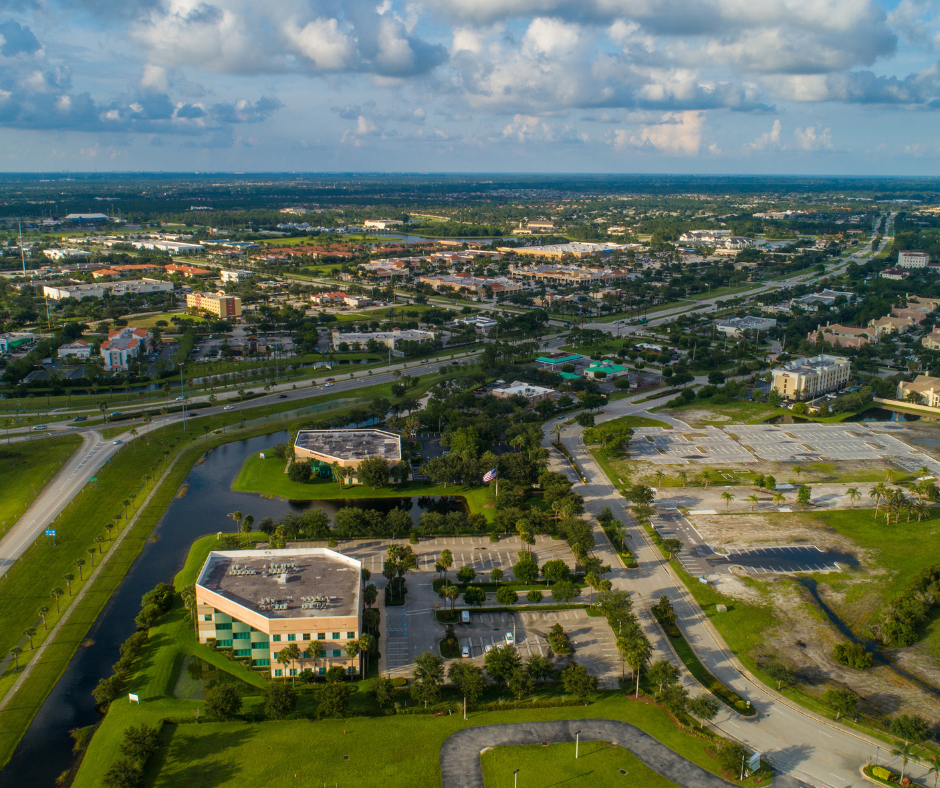
If you are moving here, the “Reality Check” is simple: You cannot survive without a car. With 76.5% of residents driving alone and a public transit system that—while fare-free—struggles to cover the vast suburban sprawl, your vehicle is your lifeline. But that lifeline comes with a cost: time.
🛑 The “Intersections of Doom”: Where Your Time Goes to Die
According to recent traffic data and local police reports, there are four specific hotspots that account for the lion’s share of delays and accidents in the city.
Gatlin Blvd & Port St. Lucie Blvd: This is the undisputed king of congestion. As the primary artery for those exiting I-95 into residential zones, this intersection is a “melting pot” of frustrated commuters and high-speed lane changes.
US-1 & Prima Vista Blvd: A classic Florida bottleneck. The mix of local shoppers on US-1 and through-traffic on Prima Vista leads to frequent rear-end collisions and significant light-cycle delays.
Crosstown Parkway & Floresta Drive: Despite being designed to relieve traffic, the complex layout of this intersection has become a headache for locals, especially with ongoing Phase 3 improvements on Floresta.
St. Lucie West Blvd near I-95: If you’re trying to grab a coffee or head to the stadium during peak hours, prepare for a “gridlock crawl.” The sheer density of retail and commercial space here was built faster than the turning lanes could accommodate.
🏗️ The Infrastructure Lag: Why it Feels Like Constant Construction
If it feels like every major road in PSL is under a “Widening Project,” it’s because they are. The city is currently in a race against its own growth.
The SW Port St. Lucie Blvd Widening: This multi-year project is essential for the city’s south end, but the “rolling lane closures” and paving operations (extending into 2025 and 2026) make the morning commute unpredictable.
The “Baffle Box” & Drainage Repairs: Because PSL was built on a series of canals, even minor culvert repairs (like the recent Johnston Rd or Sunrise Blvd closures) can shut down entire blocks for weeks, forcing thousands of cars onto already-stressed side streets.
The St. Lucie West Bridge Rehab: Crucial for safety, but a nightmare for anyone trying to cross the city horizontally.
🚌 The Transit Reality: Is ART Enough?
St. Lucie County offers Area Regional Transit (ART), a fare-free bus system. While it is an “award-winning” service, for the average remote worker or professional, it is a tough sell.
The Coverage Gap: The system covers 700,000 annual trips, but in a city of PSL’s geographic size, the “last mile” is the problem. Getting from a bus stop to your suburban cul-de-sac often requires a mile-long walk in 90-degree heat.
The Time Cost: A commute that takes 15 minutes by car can easily take 60–90 minutes by bus once transfers are factored in.
📊 Commuter Cheat Sheet: 2025 Stats
| Category | Port St. Lucie Stat | National Average |
| Avg. Commute Time | 31 Minutes | 26.4 Minutes |
| Drive Alone Rate | 76.5% | 68% |
| Avg. Cars per Household | 2.0 | 1.8 |
| Annual Wrecks | ~5,500 (2024 data) | N/A |
🎯 Conclusion: Strategic Driving is the New Norm
The “Great Port St. Lucie Commute” isn’t going away. As long as the city remains a top destination for those fleeing higher costs in South Florida, the roads will remain crowded.
To survive, residents are learning to drive with “intention”—timing grocery runs at 10:00 AM, using the Crosstown Parkway religiously to avoid Port St. Lucie Blvd, and accepting that the “15-minute drive” now takes 25. Port St. Lucie is a beautiful place to live, but until the multi-million dollar Mobility Plan (2025–2030) fully kicks in, you’d better make sure your car has good A/C and a great podcast queue.