
Florida’s Treasure Coast isn’t just a marketing slogan—it is a literal description of the seabed. In a stunning announcement following the 2025 summer salvage season and leading into the early 2026 maritime season, the 1715 Fleet-Queens Jewels divers revealed the recovery of a coin hoard valued at over $1 million.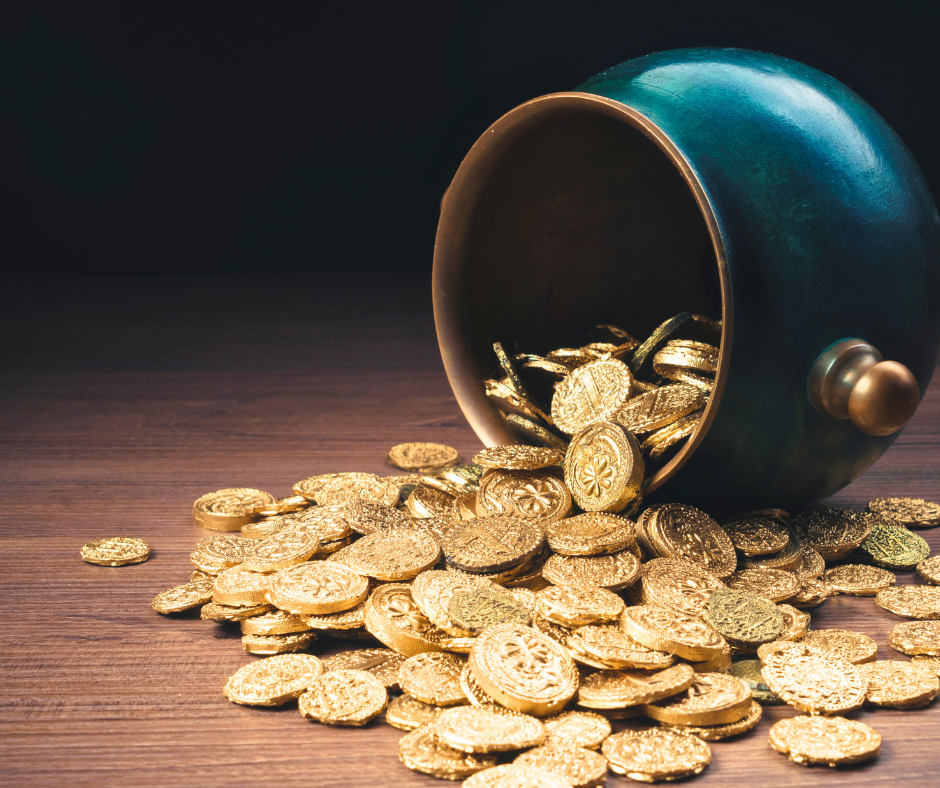
This discovery, found just feet beneath the sand off the coast of Vero Beach and Wabasso, marks the most significant find of its kind since 1990. As the “Great Thaw” of 2026 brings new energy to the region, this recovery serves as a glittering reminder that hundreds of millions in Spanish gold still rest beneath the surf.
1. The Discovery: 1,000+ Links to the Past
The recovery was led by Captain Levin Shavers and his crew, working under the exclusive salvage rights held by 1715 Fleet-Queens Jewels, LLC.
The Silver: Over 1,050 silver reales (the legendary “pieces of eight”) were recovered. Most were minted in Mexico City, Lima, and Potosí.
The Gold: The haul included five rare gold escudos and several gold artifacts that appeared as if they “fell into the water yesterday.”
The “Chest” Theory: Because the coins were found in a tight concentration, experts believe they weren’t scattered by the storm initially but were likely contained in a single wooden chest that finally disintegrated after 311 years.
2. Why Vero Beach? The Geography of a Disaster
On July 31, 1715, eleven ships of the Spanish Treasure Fleet were smashed against the Florida reefs by a monstrous hurricane.
The Corridor: The wreckage spans nearly 50 miles, but the southern tip near Vero Beach and Sebastian remains the “hot zone” due to the way the Gulf Stream pushes debris toward the shore.
Modern Tech: Divers today use sophisticated sonar scanning and “prop-wash” deflectors to move the sand safely, revealing bedrock eight to ten feet down where the heavy gold settled.
3. The Legal Battle: Who Owns the Gold?
In 2026, the question of “Finders Keepers” is a legal minefield. The salvage of the 1715 Fleet is governed by a strict partnership between private enterprise and the State of Florida.
The 20% Rule: By law, the State of Florida has the right to claim 20% of all recovered artifacts for display in state museums, such as the McLarty Treasure Museum.
The Split: The remaining 80% is typically divided between the salvage company (Queens Jewels) and the subcontractors/divers who physically located the hoard.
Federal Oversight: Because the wrecks are in sovereign waters, a U.S. District Court judge must ultimately sign off on the “distribution” of the treasure after it has been meticulously cataloged and conserved.
4. Scientific vs. Commercial Value
Archaeologists often clash with treasure hunters, but the 1715 Fleet-Queens Jewels team emphasizes their “Custodian” role.
Preservation: Every coin undergoes electrolysis to remove centuries of “sea-crust” without damaging the silver.
Historical Data: The mint marks and dates provide vital data on 18th-century colonial trade routes and the economic makeup of the Spanish Empire.
Conclusion: The Hunt Continues
With at least five of the original 1715 ships still completely missing, the $1 million find of 2026 is likely just a fraction of what remains. For residents of Vero Beach, the treasure isn’t just in the water—it’s in the history that washes up on their doorsteps every time a hurricane stirs the Atlantic.