
Port St. Lucie (PSL) is currently the darling of Florida real estate. It’s safe, it’s clean, and compared to Miami, it looks like a bargain. But if you’re a digital nomad or a single remote worker looking for a “vibe,” a community, or a walkable lifestyle, Port St. Lucie isn’t just a bad fit—it’s a financial and social trap.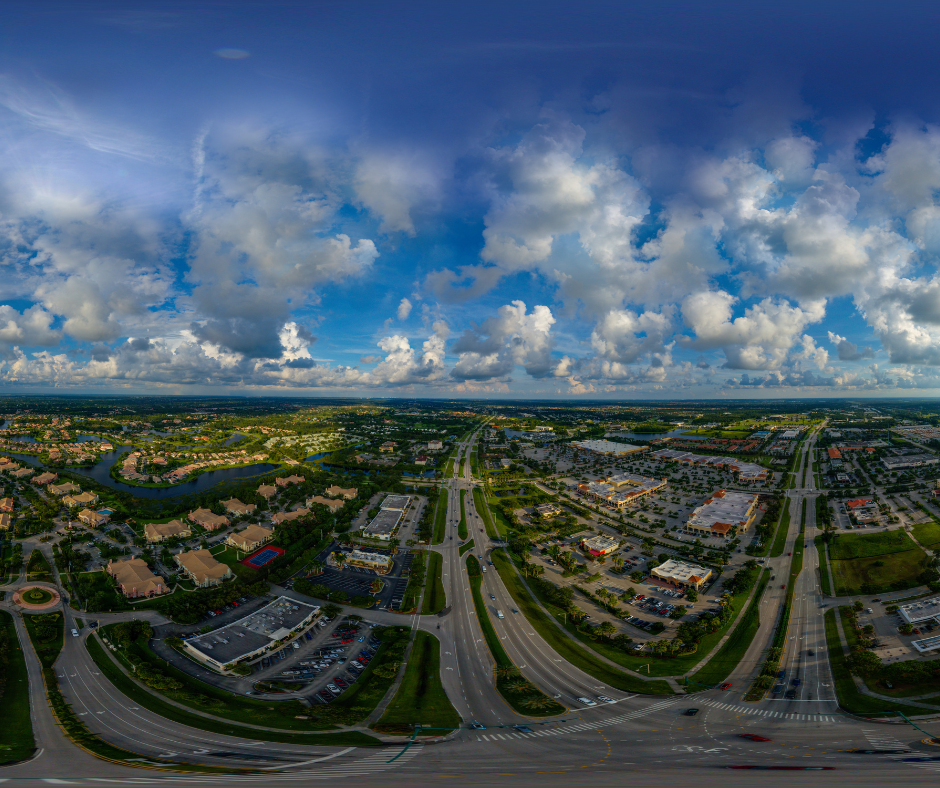
While families flock here for the yards and the schools, the nomad infrastructure is virtually non-existent. Here is the unfiltered reality of what it actually costs to “work from home” in a city designed entirely for the “drive to work” lifestyle.
🚗 1. The Car-Dependency Tax
In most nomad hubs (think Austin, Medellin, or even St. Petersburg, FL), you can survive on a bike or a short Uber ride. In PSL, a car is a survival requirement.
The Problem: There is no “downtown.” Everything is 15 minutes away by highway.
The Cost: Florida has some of the highest auto insurance rates in the country. Between a car payment, gas, and premium insurance, you are looking at a $700–$900 monthly “mobility tax” just to get to a grocery store.
☕ 2. The “Third Space” Desert
Digital nomads thrive in “third spaces”—coworking offices, local coffee shops, and communal hubs.
The Problem: Port St. Lucie is a city of strip malls. While there are a few Starbucks and Paneras, they are often crowded with students or families.
The Cost: Dedicated coworking spaces in PSL are incredibly rare. If you want a professional community, you’ll likely find yourself driving 30-45 minutes south to West Palm Beach or Jupiter, adding even more to your fuel and toll budget.
⚡ 3. The Hidden Fixed Costs (The “Florida Premium”)
Nomads often look at the lack of state income tax as a win, but in PSL, the “hidden” costs of living in a tropical sprawl eat those savings alive.
Electricity: Your A/C will run 24/7 for 10 months of the year. Expect $200–$350 monthly power bills.
Rent: The PSL rental market has surged. A modern 1-bedroom in a safe area will cost you $1,900–$2,300, often without utilities included.
📊 The Monthly Reality Check: What You’ll Actually Spend
For a single remote worker living a “middle-class” lifestyle in Port St. Lucie:
| Expense Category | Monthly Estimated Cost |
| Rent (1BR Modern Apt) | $2,100 |
| Car (Payment + Gas + FL Insurance) | $850 |
| Utilities (Electric/Water/High-Speed Internet) | $400 |
| Groceries & Dining Out | $700 |
| Healthcare/Total Miscellaneous | $300 |
| TOTAL MONTHLY BURN | $4,350 |
> Nomad Note: Spending over $4,300 a month in a city with zero walkability and limited nightlife is a hard pill to swallow for someone used to more vibrant markets.
🛑 Top 5 Reasons PSL Fails the Digital Nomad Test
Zero Walkability: The Walk Score for most of PSL is under 20. You cannot walk to a bar, a gym, or a park from most residential neighborhoods.
The “Social Ceiling”: The demographic is heavily weighted toward retirees and young families. If you are a single professional, your “dating and social” pool is extremely limited without a long commute.
Infrastructure Lag: As noted in our [PSL Commute Guide], the traffic is getting worse, and public transit is a ghost.
The HOA/CDD Nightmare: If you rent or buy in a new community, you are likely paying for amenities (pools, gates) you might not use, via high [CDD fees].
Climate Isolation: From June to September, the heat and humidity make outdoor work impossible. You are effectively “housebound” by the weather.
🎯 Conclusion: Who is Port St. Lucie Actually For?
Port St. Lucie is a fantastic place for a growing family that needs four bedrooms, a backyard, and a safe cul-de-sac. It is an excellent place for retirees looking for golf and quiet.
But for the digital nomad? It is an expensive, car-dependent, and socially isolating environment. If you’re looking for the “Florida Lifestyle” as a remote worker, you’re better off paying the extra $500 in rent to live in a walkable neighborhood in West Palm, Delray, or even Fort Pierce’s historic district.
Don’t let the “cheap” base price fool you—living in PSL as a nomad costs more in time, gas, and sanity than the data suggests.