
In recent years, the housing market has experienced incredible growth and record-breaking prices. Many have dubbed this period as the “unicorn” years of real estate. However, it’s important to understand that the current market conditions cannot be compared to those extraordinary times. Here’s why: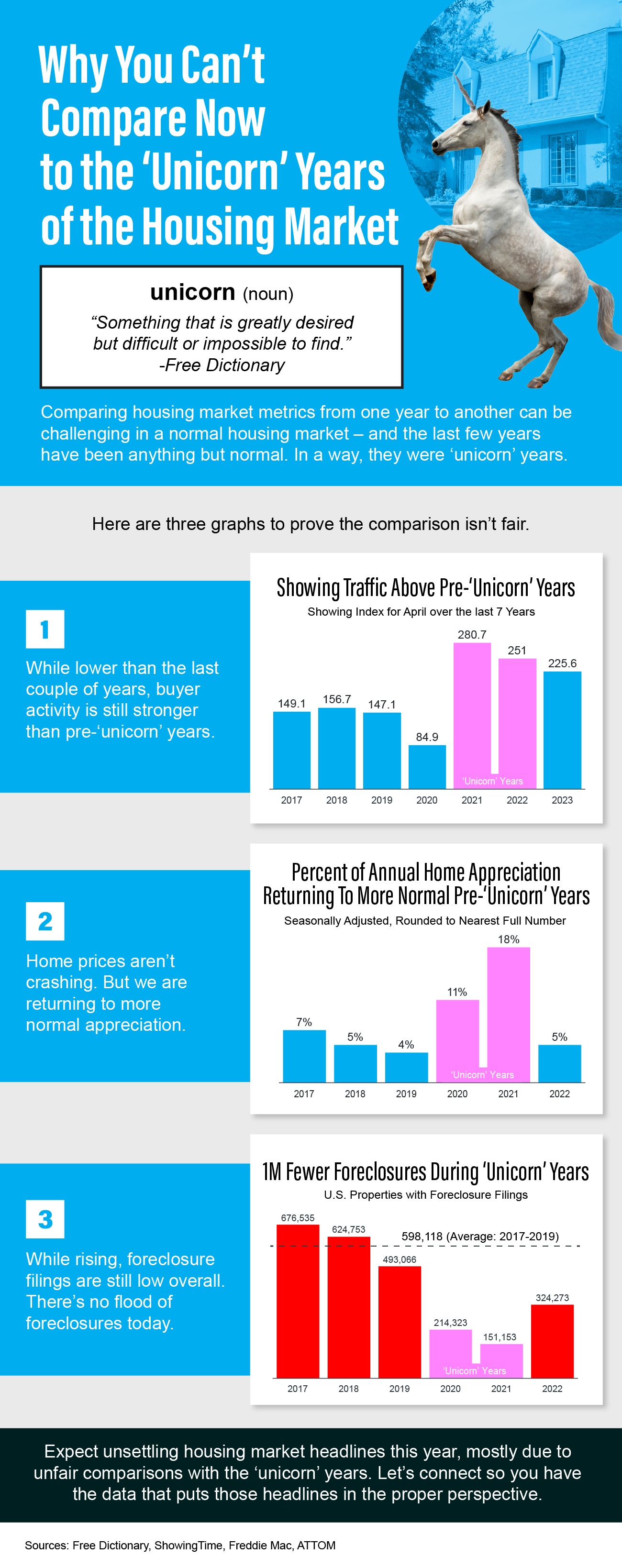
Economic Factors: The housing market is heavily influenced by economic conditions, such as job growth, interest rates, and consumer confidence. During the unicorn years, the economy was booming, and all these factors aligned to create a perfect storm for rapid price appreciation. Today, we are in a different economic landscape, with factors like a fluctuating job market and changing interest rates, which impact the housing market differently.
Market Stability: The unicorn years were characterized by a speculative frenzy, where housing prices soared to unsustainable levels. This led to a bubble that eventually burst, resulting in a market crash and widespread foreclosures. The current market, on the other hand, has seen more stability and a more measured pace of growth, reducing the risk of a sudden market collapse.
Housing Supply: One significant difference between the unicorn years and the current market is the housing supply. During the unicorn years, there was a shortage of housing inventory, leading to fierce competition among buyers and skyrocketing prices. Today, the housing supply has improved, providing more options for buyers and helping to stabilize prices.
Mortgage Standards: Another critical factor to consider is the lending practices and mortgage standards. During the unicorn years, lending standards were lax, and many buyers obtained loans they couldn’t afford. This led to a wave of mortgage defaults and contributed to the market crash. Today, lending practices are more stringent, ensuring that buyers are qualified and can afford their mortgages.
It’s crucial to understand that comparing the current market to the unicorn years can be misleading and create unrealistic expectations. While the current market may not be experiencing the same rapid price growth, it offers stability, more balanced conditions, and sustainable long-term growth.
In conclusion, it’s important to approach today’s housing market with a realistic mindset. While it may not resemble the unicorn years, it presents its own set of opportunities and advantages. By focusing on market stability, affordability, and long-term investment potential, buyers can make informed decisions and achieve their homeownership goals.