
The courts of Port St. Lucie (PSL) are currently the epicenter of a quiet but fierce local conflict: The Pickleball Civil War. As the nation’s fastest-growing sport, pickleball has exploded in popularity, demanding more court space and attracting legions of new players—many of whom are migrating from the traditional world of tennis.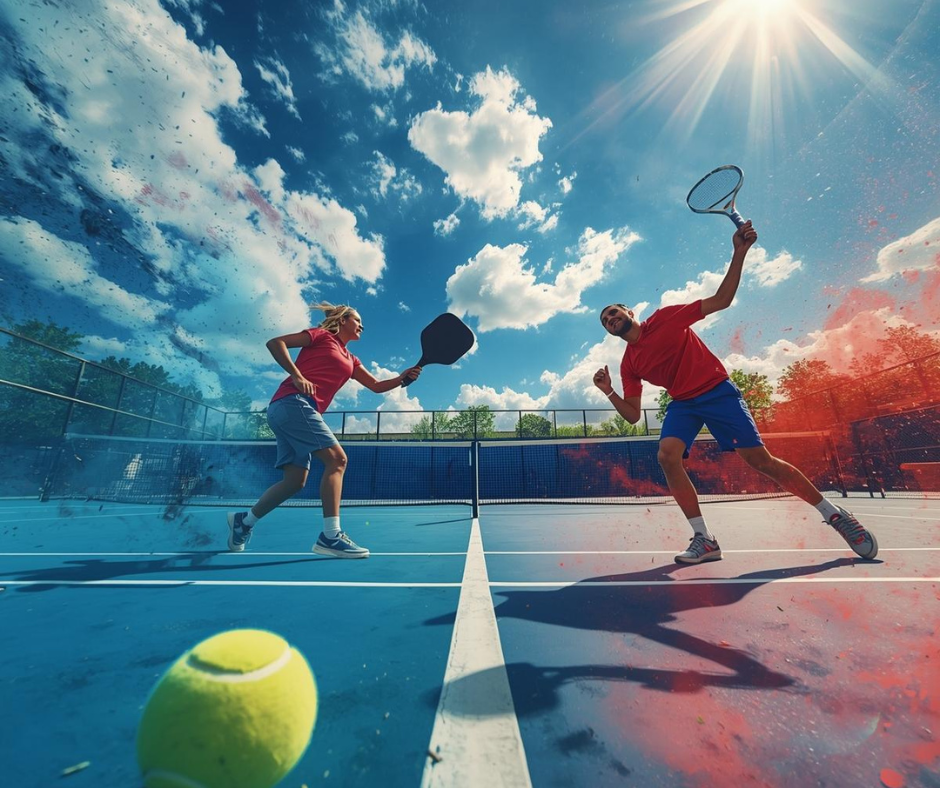
This rapid expansion has created a flashpoint in communal spaces, particularly in PSL’s parks and residential communities where existing tennis players feel their territory and tranquility are being invaded. The tension is palpable, fueled by noise complaints, court time disputes, and a fundamental clash between the traditions of a century-old sport and the booming energy of a dynamic newcomer. Welcome to the frontline of the PSL sports controversy.
The Heart of the Conflict: Noise and Space
The most immediate source of friction is the stark difference in sound and space requirements between the two sports.
1. The Clack vs. The Thwack (The Noise Factor)
The single biggest complaint from old-school tennis players is the noise.
Pickleball Sound: The rigid paddle hitting the hard plastic ball produces a sharp, staccato clack or pop. This sound carries further and is perceived as more intrusive than the softer thwack of a tennis racket hitting a felt ball.
Acoustics in PSL: In tightly packed residential communities in St. Lucie County, the repetitive clacking of multiple pickleball courts operating simultaneously can feel relentless, leading to formal HOA complaints and debates over noise ordinances.
2. The Land Grab (The Space Factor)
Pickleball courts are smaller, allowing one traditional tennis court to be easily converted into three or four pickleball courts. This efficiency is the core of the court time disputes.
Conversion Frustration: Many communities in Port St. Lucie have converted underutilized tennis courts into popular pickleball hubs, permanently reducing the space available for the established tennis community.
The Demand: The demographic drawn to pickleball (often active seniors and young families) has created an unprecedented demand for court time, leading to frustrating scheduling conflicts and court reservations favoring the higher volume of pickleball players.
🎾 The Culture Clash: Tradition vs. Trend
Beyond the logistical issues, there is a distinct cultural friction between the dedicated, long-time tennis community and the casual, socially focused pickleball community.
| Factor | Tennis Player Perspective (The Old Guard) | Pickleball Player Perspective (The New Wave) |
| Pace and Rules | Focuses on precision, formal scoring, and intense competition. Views pickleball as “easy” or “simplistic.” | Focuses on fast, accessible fun, and social interaction. Views tennis as too demanding and formal. |
| Social Environment | Often quiet, respectful of focus, and organized through formal club structures. | Highly social, noisy, and welcoming, often using open play and rotation systems, leading to a crowded, party-like atmosphere. |
| Court Etiquette | Strict adherence to traditional rules and attire. | More relaxed; the priority is on getting as many players involved as quickly as possible. |
🤝 Conclusion: Finding Peace on the Courts
The Pickleball Civil War in Port St. Lucie is ultimately a debate about allocating shared public resources. While the pickleball community continues its explosive growth, the solution is not elimination, but coexistence and careful planning.
Local parks and HOAs in PSL are learning to implement strategies such as designated time slots, erecting noise-dampening barriers between courts, and dedicating entirely separate facilities for each sport. The goal must be to ensure that both the cherished traditions of PSL tennis and the energetic expansion of pickleball can thrive side-by-side, ending the tension and allowing everyone in the PSL sports community to focus on the game—not the noise.